
Heat-pump air often feels less hot than furnace air, even while it warms the home. The system may also pause ordinary heating while the outdoor coil defrosts. The thermostat trend, the length of the change, and any warning signs help separate normal operation from a loss of heat. Homeowners and property teams in Northern Virginia, Washington, DC, and nearby Maryland can use this guide to document the symptom safely and decide when to request heating repair.
First confirm that the equipment is a heat pump
An outdoor unit can look like an air conditioner, so check a recent service record, installation proposal, property equipment list, or manufacturer label that is visible without removing a panel. Many heat-pump thermostats display AUX or Emergency Heat, but labels and backup-heat arrangements vary. The thermostat display alone cannot confirm the equipment type.
A heat pump moves heat through a refrigeration cycle. A furnace produces heat and has different operating and safety concerns. Some properties use a dual-fuel system that pairs both types. If you cannot identify the equipment, record the indoor and outdoor model numbers from accessible labels and ask the service company or property manager. Leave the cabinet closed.
Cooler-feeling air can still be normal heat-pump operation
A heat pump transfers outdoor heat into the home. It does not use the very hot combustion surface found in a furnace, so the supply air can feel less hot against your skin while it is still warming the room. Air movement also feels cool when it is below body temperature. Your hand at the register is a poor test of heating performance.
Watch the room temperature and the pattern over time. If the thermostat is in Heat mode, the property holds the setpoint, and the system cycles or modulates normally, less-hot supply air may not indicate a fault. If the fan is set to On, it can also circulate room-temperature air between active heating calls. Setting the fan to Auto lets the controls decide when the blower should run for most systems. Follow the equipment and thermostat manuals when their instructions differ.
A brief defrost cycle can change the air at the registers
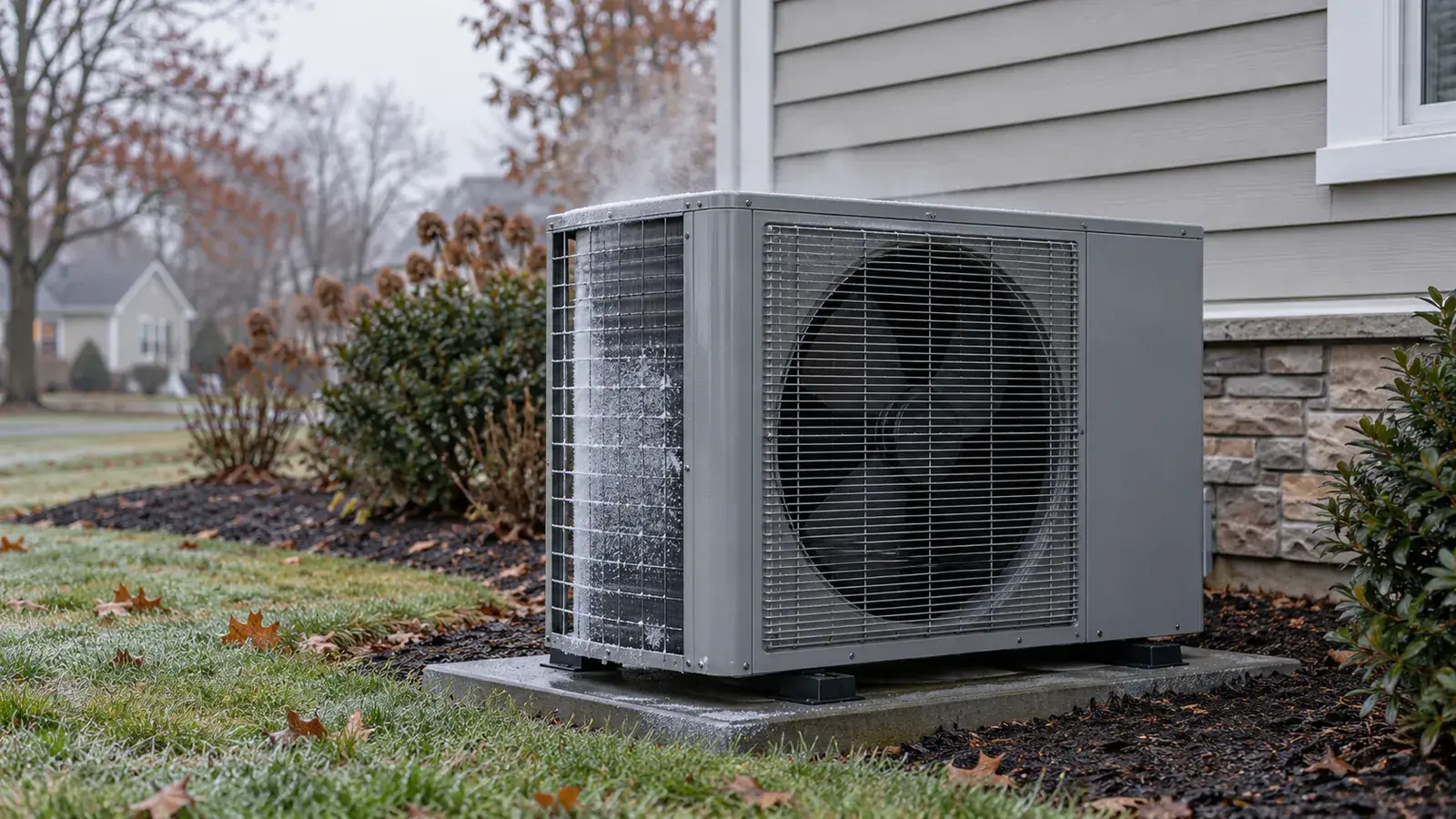
In cold, damp weather, moisture can freeze on an air-source heat pump's outdoor coil. The system periodically enters defrost mode to warm the coil and clear the frost. During that temporary change, the outdoor fan may stop, the sound may change, water vapor or water may appear outside, and some occupants may notice cooler indoor air. Systems with configured backup heat may use it during defrost. Other arrangements behave differently.
A light frost that clears as the system completes its normal cycle is different from the outdoor unit becoming encased in heavy or persistent ice. Do not chip ice, pour hot water on the coil, block drainage, or force the controls into a test mode. Watch from a safe location and note whether the unit returns to heating and whether the indoor temperature recovers. Because defrost timing depends on the equipment, controls, and conditions, there is no universal duration that proves a cycle is normal.
Make these safe observations before calling
Start with controls and airflow that are meant for normal user access. Confirm that the thermostat is set to Heat, not Cool or fan-only operation, and set the fan to Auto unless the equipment manual says otherwise. Note the current room temperature, setpoint, exact thermostat message, and whether AUX or another indicator appears. Avoid installer menus, wiring changes, or repeated resets.
Check the filter only if it is in a routine access location and use the size and type specified for the system. Keep supply registers and return grilles open and unobstructed. From the ground or another safe location, look for light frost, heavy ice, blocked airflow, or water from a gutter or roof reaching the outdoor unit. Do not remove panels, reach through a grille, climb onto a roof, or work around live electrical components.
- Confirm Heat mode and set the thermostat fan to Auto
- Record the indoor temperature, setpoint, messages, and when the symptom began
- Check the normal user-access filter without opening equipment panels
- Open and uncover supply registers and return grilles
- Observe outdoor frost or ice from a safe location and take a photo if practical
- Stop repeated breaker resets and report any new odor, sound, or electrical symptom
Know when cool air points to a repair problem
Request professional diagnosis when the property keeps losing temperature, cool air continues through active heating calls, the system cannot reach or maintain the setpoint, or heavy ice remains on the outdoor unit. Weak airflow, repeated starts and stops, an outdoor fan or compressor that behaves abnormally, frequent fault messages, and auxiliary heat behavior that is new or unexplained are also useful reasons to call.
A technician may need to separate thermostat or control problems from restricted airflow, defrost-control or sensor faults, reversing-valve operation, refrigerant-side performance, outdoor-unit drainage or airflow, and the configured backup-heat system. Several faults can feel the same at a register, and a visible symptom cannot identify the failed component by itself.
Treat smoke, scorching, a strong electrical or burning odor, or a repeatedly tripping breaker as a reason to stop operating the system and get prompt professional or emergency guidance. If the property has fuel-burning backup heat and you smell natural gas, a carbon monoxide alarm sounds, or anyone has possible exposure symptoms, stop troubleshooting, leave, and follow emergency procedures.
How auxiliary heat and emergency heat work differently
Auxiliary heat is a supplemental source that the thermostat or system controls can call automatically. Depending on the installation, it may be electric resistance heat or a fuel-burning furnace in a dual-fuel system. It may operate during defrost, while recovering from a large setpoint change, or when the heat pump cannot meet the building's heating demand on its own. A brief AUX indication can be normal.
Emergency Heat is typically a manual thermostat mode that disables normal heat-pump operation and relies on the configured backup source. Do not use it as a general test or a shortcut for faster heating. Labels and control logic vary, so follow the thermostat and equipment manuals or professional direction. If the primary heat pump appears to have failed, call for service and ask how to operate the property while waiting.
What a technician may evaluate
A useful diagnosis starts with the symptom history and the system's actual operation. The technician may review thermostat calls and configuration, indoor and outdoor electrical operation, airflow and filter condition, temperature response, fault history, defrost controls and sensors, reversing-valve operation, refrigerant-side measurements, outdoor-coil condition, and the setup of electric or dual-fuel backup heat.
The findings determine the next step. It may involve the controls, airflow, defrost system, electrical components, refrigerant circuit, backup heat, or another property-specific condition. Routine maintenance covers seasonal condition checks. Schedule an active loss of heat, persistent ice, or electrical symptom as a repair concern so the service team can prepare for the complaint.
Apartments and managed properties need clear symptom records
For an apartment, condominium, or managed property, record the building and unit number, thermostat mode and message, current and requested temperatures, rooms affected, when the problem started, visible outdoor-unit condition, and whether neighboring units report the same issue. Include access instructions, equipment location, pets, parking or roof-access rules, and the person who can authorize work.
Residents should follow the property's reporting process, but management notification should never delay evacuation or emergency response for smoke, fire, gas odor, a carbon monoxide alarm, or possible exposure symptoms. Property teams should distinguish a single-unit control or airflow complaint from a shared equipment or building-wide heating problem before assigning the work order.
Choose the next step for heat-pump trouble in VA, DC, and Maryland
If the home holds temperature and the system returns to normal after a brief operating change, continue monitoring and record the pattern for the next maintenance visit. If indoor temperature keeps falling, cool air persists, heavy ice does not clear, or another fault sign appears, schedule heating repair. The feeling at one register cannot identify the failed part.
Hot & Cool Services provides heating repair for homes, apartments, businesses, and managed properties across Manassas and Northern Virginia, Washington, DC, and nearby Maryland communities. Share the equipment type if known, thermostat display, temperature trend, outdoor-unit observations, and property access details when requesting service.
Local resources
Plan the right next step
Sources
Technical and safety references
Material technical and safety statements in this guide were checked against the following primary sources.
Related services
Professional help for the next step
Last updated . General information only; actual HVAC conditions require property-specific evaluation.